Free Databases for Research
Beyond Google: 5 Amazing, Free Research Databases for Social Science
Article Focus: Source: Linkedin
Identifying free research databases for social science-oriented research and disciplines, such as applied economics, law, history, sociology & psychology. To be sure, all of the databases referenced below cover a much wider-range of disciplines.
Context:
I no longer have immediate access to the many remarkable, subscription-based research tools I had access to earlier in my career working in Fortune 500 organizations & law firms or while adjunct teaching at a Top 20 law school.
Yet as an entrepreneurial independent researcher, I still need to leverage primary & secondary-source research quite a bit for independent research, volunteerism and as an autodidact who writes as a hobby. My interests & work typically bring me to intersections among & between different social science disciplines. While I’ve encountered and used dozens of research databases, these five are the ones I tend to return.
#1 CORE – The Mother of All Open Access Databases
Core’s Mission?

#2 JSTOR – The Mother of All “Freemium” Research Databases
#3 Social Science Research Network
The Social Science Research Network, as you might have guessed, more narrowly focuses on journals and articles from throughout social science disciplines.
All of the search functions are free, following an email registration process. However, SSRN will occasionally cross-link to individual journals that require individual subscriptions.

With SSRN, advanced search is a bit different. By way of example, here you can see it’s possible to ‘start’ across all possible disciplines, drill down to Social Sciences, further focus on Economics, until, finally, looking at the subset of papers, articles and journals available by source:

#4 Directory of Open Access Journals
The Directory of Open Access Journals started in 2003 with just 300 journals.
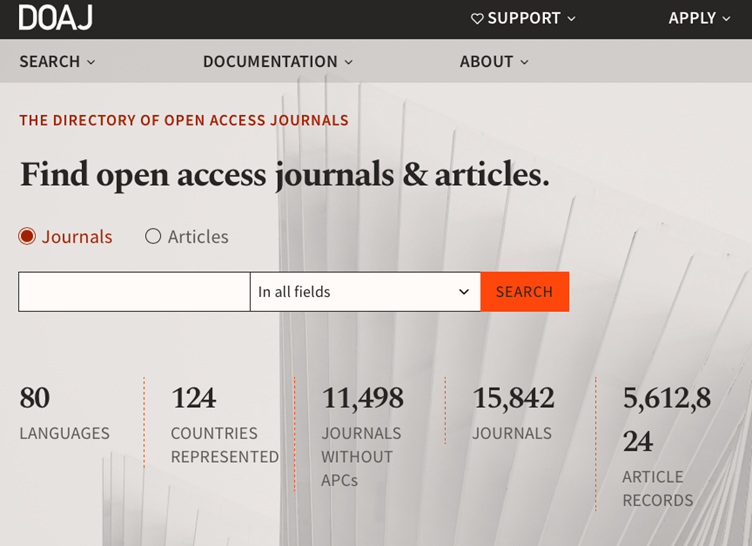
Yes, many (maybe all?) of the journal articles you’ll find in DOAJ might also be found in the much larger CORE database (#1 in our list above).
#5 Data.Gov – An Unbelievably Awesome, Somewhat Exhausting Database
Data.gov is managed and administered by the United States General Services Administration on behalf of virtually all United States governmental departments, bureaus, agencies and divisions.

Data.gov is… different. Why? Because it’s a research database for, as it’s name strongly implies, DATA. (Note: This image also includes a link back to the Data.gov website.)
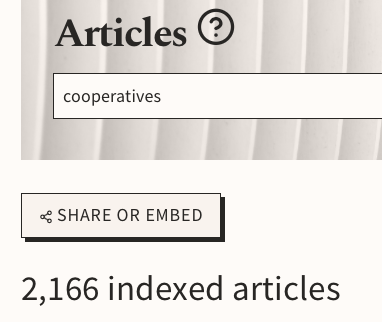
The search results on Data.gov, like the ones in the image on the left, show something altogether different than links to, say, peer-reviewed articles that I might find in our other databases on this list.
Data.gov brings back an array of datasets, in a variety of formats, from any and all U.S. government agencies that have available data pertaining to the topic.

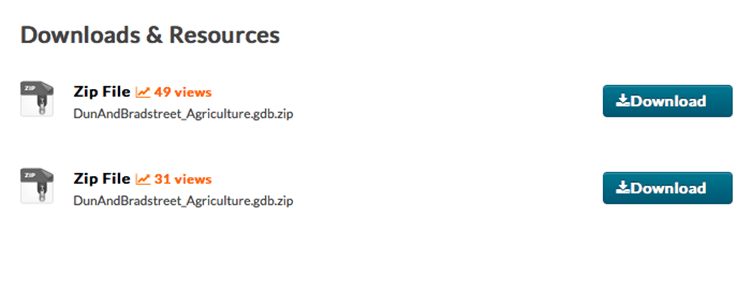
By way of example, here’s an illustration of the option to download data files for just two of the 4,299 data sets from my United States farming cooperatives search on Data.gov:
The three reasons why I think Data.gov is an awesome resource for independent researchers, yet also not for the feint of heart:
- Data.gov provides access to data sets that are wide, deep and broad-in-scope. And not much else.
- Data.gov is mostly filled with numeric data. It’s a treasure trove, for sure. But it also means getting comfortable with the, gulp, ‘math’ side of research.
- Data.gov provides some – but not a ton – of resources on how researchers can and should then navigate or utilize the data. Thus, learning more about leveraging data in your research from training sources other than Data.gov is a really good idea.
The “Limits” of Google for “Serious” Independent Researchers
As I mentioned briefly above, I use research quite a bit (i) in my work, (ii) for my volunteerism and (iii) as an autodidact who writes as a hobby.
Yes, Google is a remarkable search tool in many respects. Yet with changes to Google’s algorithm and business model, I increasingly find basic internet search results too often ‘push’ toward advertising-oriented results. Google searches can be helpful in identifying the hundreds of open access and free research databases that are available.
Source: Linkedin

– This article is written by Christopher Kopka

